
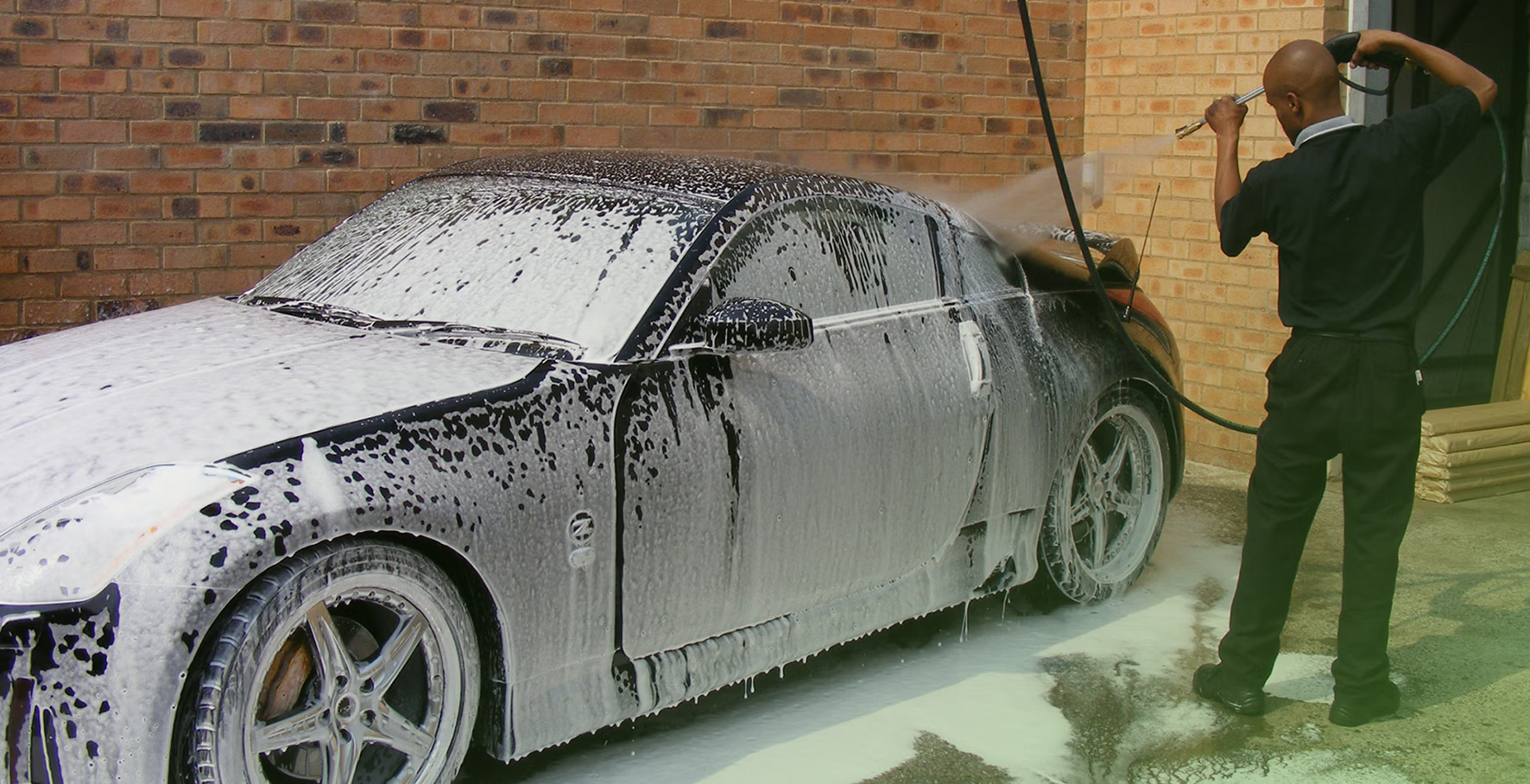
A common misconception in the high-pressure washer industry is that electric pressure washers cannot deliver the same pressure and flow rates as engine-powered machines. Pressure and flow rate are, in fact, determined by a machine's pump and the size of its engine or motor. Choosing the right high-pressure washer for your needs should not be a difficult task. This blog will help you understand why.
It’s plain and simple - whether you’re cleaning driveways or unblocking a drain, there are three main factors that you need to consider:
- Pressure
- Flow Rate
- Continuous Runtime
Flow rate, which refers to the amount of water leaving the pump, is one of the most important factors to consider. With insufficient flow, a machine is less likely to achieve optimum performance and may experience reduced pump life due to cavitation.
A machine’s pressure is not determined by the force of water at the end of a spray gun, but rather by how forcefully the water is pushed through the pump. Flow rate should be prioritised over pressure, as pressure helps loosen dirt and debris, while flow rate removes it more efficiently.
When selecting a high-pressure washer, be sure to enquire about how long it can operate before it begins to overheat, as excessive overheating may cause damage to the pump, motor, or engine.
.png)
Just as you would when purchasing a car, it is important to consider the machine's internal components:
- Pump - Three-piston plunger pumps are generally the preferred option, as they can operate for extended periods before requiring pump seal replacements.
- Unloader Valve - Works as a safety device to protect the pump in the event of over-pressurisation.
- Motor/Engine- Electric machines are often preferred, unless in the case that your site has limited access to electricity. Compared to engine-powered units, electric high-pressure washers require less maintenance, as there is no need for engine oil changes or fuel filter replacements. Aside from their indoor usage, CEMSA’s electric units are sure to provide return on investment because they make use of induction motors that require little to no servicing and only require occasional greasing.
- Direct/Gearbox Drive - In a direct drive unit, the motor connects directly to the pump, resulting in both components spinning at the same speed. A gear-driven machine will be able to run for an extended amount of time as the pump is forced to spin at a lower RPM.
.png)
To sum it up, there are a few factors you can assess to determine the quality of a high-pressure washer:
- High-quality, serviceable pumps from the likes of Annovi Reverberi
- Electric motors from Nicolini & C and Electromote
- High-pressure hoses with sufficient length from M.B. ITALIA S.r.l
- High-quality spray guns, nozzles, lances and valves from MTM Hydro and Tecomec
- Robust industrial frames with hard-wearing wheels for rugged environments
Fortunately, we maintain an extensive stock holding of spares, conveniently available from a single source. When it comes to the maintenance of your high-pressure washer, our sister company, MaPa Cleaning Technologies, offers service plans and maintenance support 7 days a week. To learn more about our range of high-pressure solutions, feel free to contact your nearest CEMSA branch or distributor via our contact page.